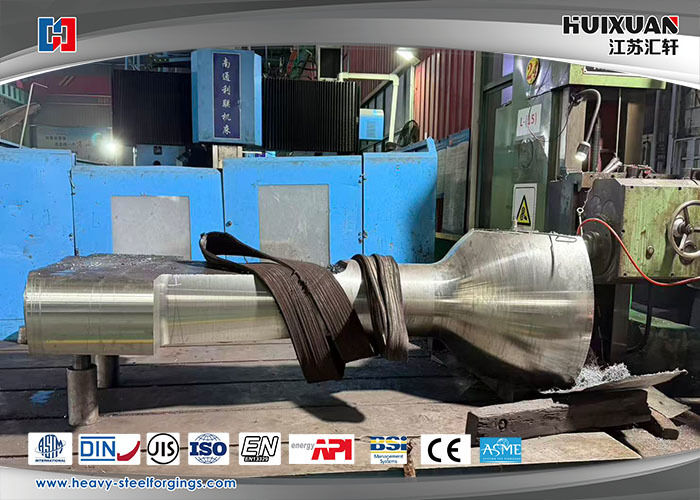
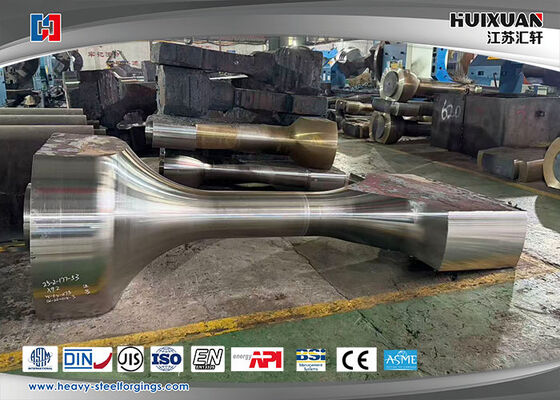
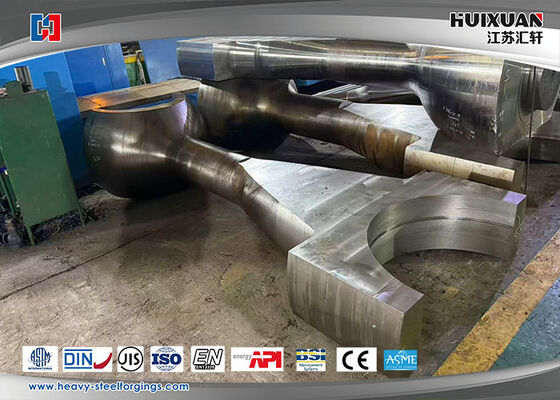
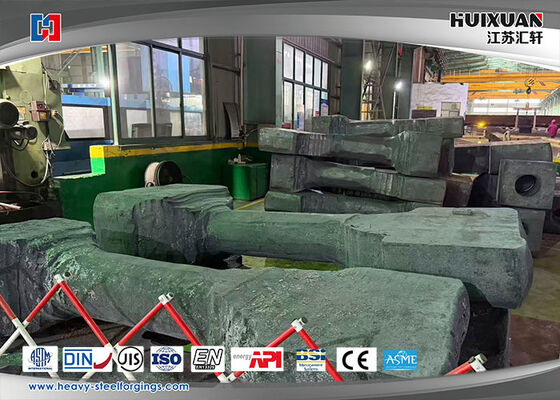
हेवी ड्यूटी कार्बन स्टील फोर्जिंग्स ASTM मानक मरीन कनेक्शन रॉड
मरीन डीजल इंजन कनेक्टिंग रॉड के प्रचार का परिचय
मरीन डीजल इंजन कनेक्टिंग रॉड जहाज के पावर सिस्टम का एक मुख्य और महत्वपूर्ण घटक है। पिस्टन और क्रैंकशाफ्ट को जोड़ने वाले मुख्य ट्रांसमिशन भाग के रूप में, यह ईंधन दहन से उत्पन्न रैखिक गति को घूर्णी गति में परिवर्तित करने के मिशन को पूरा करता है। महासागर नेविगेशन और भारी-भार परिवहन जैसी कठोर कार्य परिस्थितियों में, इसका प्रदर्शन सीधे जहाज की प्रणोदन दक्षता, ईंधन अर्थव्यवस्था और नेविगेशन सुरक्षा से संबंधित है।
उत्पाद के मुख्य लाभ और तकनीकी विशेषताएं
1. उत्कृष्ट यांत्रिक गुण
उच्च-शक्ति असर क्षमता: 42CrMo, 34CrNiMo6, और 40CrNiMoA जैसी उच्च-गुणवत्ता वाली मिश्र धातु इस्पात सामग्री से बना, क्वेंचिंग और टेम्परिंग उपचार के बाद, तन्यता ताकत 900MPa से अधिक तक पहुंच सकती है, और उपज शक्ति ≥825MPa है
उत्कृष्ट थकान प्रतिरोध: कास्टिंग की तुलना में, फोर्जिंग में थकान शक्ति में 30%-50% की वृद्धि होती है, जिससे वे प्रति मिनट हजारों बार चक्रीय भार का सामना कर सकते हैं
सटीक निर्माण प्रक्रिया: नियर-नेट आकार तकनीक बाद की प्रसंस्करण को कम करती है, जिसमें फोर्ज्ड कनेक्टिंग रॉड बिग एंड होल की सटीकता IT8 स्तर तक पहुंचती है, और डायनामिक बैलेंस त्रुटि ≤5g·cm है
2. विशेष वातावरण के लिए अनुकूलन क्षमता
समुद्री वातावरण में संक्षारण प्रतिरोध: नमक स्प्रे और आर्द्र वातावरण से संक्षारण का प्रभावी ढंग से विरोध करने के लिए नाइट्राइडिंग और फॉस्फेटिंग जैसी सतह उपचार प्रक्रियाओं को नियोजित किया जाता है
उच्च-तापमान स्थिरता: थर्मल विरूपण और थकान दरार को रोकने के लिए उच्च-तापमान दहन कक्ष वातावरण में आयामी स्थिरता बनाए रखें
एंटी-बायोफॉलिंग: विशेष कोटिंग गर्मी अपव्यय पर समुद्री बायोफॉलिंग के प्रभाव को कम करती है
3. हल्के और कुशल डिजाइन
टोपोलॉजी ऑप्टिमाइज़ेशन संरचना: I-आकार के क्रॉस-सेक्शन जैसे अनुकूलित डिज़ाइन अपनाकर, 15%-20% का वजन घटाने का प्रभाव प्राप्त होता है
सटीक सतह उपचार: सतह खुरदरापन Ra≤1.6μm, तेल फिल्म निर्माण में सुधार, और घर्षण हानि को 12% तक कम करना
II. सामग्री और निर्माण प्रक्रिया मानक
सामग्री चयन
इंजन प्रकार सामान्य सामग्री ताप उपचार प्रक्रिया प्रदर्शन विशेषताएँ
बड़े कम गति वाले डीजल इंजन, 35, 40, 45 कार्बन स्टील, सामान्यीकरण + खुरदरी मशीनिंग + एनीलिंग, कठोरता सुनिश्चित करना, कम थकान शक्ति आवश्यकताओं के साथ
मध्यम और उच्च गति वाले डीजल इंजन 45Cr, 35CrMo, 42CrMo क्वेंचिंग और टेम्परिंग उच्च शक्ति, उच्च थकान शक्ति
उच्च गति उच्च शक्ति डीजल इंजन 40Cr, 35CrMo, 42CrMo, 18Cr2Ni4WA क्वेंचिंग और टेम्परिंग + सतह सुदृढ़ीकरण अत्यंत उच्च थकान शक्ति और प्रभाव क्रूरता
इंजन प्रकार
सामान्य सामग्री
ताप उपचार प्रक्रिया
प्रदर्शन विशेषताएँ
बड़े कम गति वाले डीजल इंजन
कार्बन स्टील ग्रेड 35, 40, और 45
सामान्यीकरण + खुरदरी मशीनिंग + एनीलिंग
कठोरता सुनिश्चित करें, थकान शक्ति के लिए कम आवश्यकताएं
मध्यम से उच्च गति वाले डीजल इंजन
45Cr, 35CrMo, 42CrMo
क्वेंचिंग और टेम्परिंग
उच्च शक्ति, उच्च थकान शक्ति
उच्च गति उच्च शक्ति डीजल इंजन
40Cr, 35CrMo, 42CrMo, 18Cr2Ni4WA
क्वेंचिंग और टेम्परिंग + सतह सुदृढ़ीकरण
अत्यंत उच्च थकान शक्ति और प्रभाव क्रूरता
निर्माण प्रक्रिया प्रवाह
1. सामग्री तैयारी: उच्च गुणवत्ता वाली मिश्र धातु इस्पात बिलेट का चयन करें
2. फोर्जिंग प्रक्रिया: निरंतर धातु प्रवाह रेखाओं को सुनिश्चित करने के लिए बहु-दिशात्मक फोर्जिंग तकनीक का उपयोग करना
3. ताप उपचार: व्यापक यांत्रिक गुणों को बढ़ाने के लिए क्वेंचिंग और टेम्परिंग
4. सटीक मशीनिंग: आयामी सटीकता सुनिश्चित करने के लिए सीएनसी मशीन टूल मशीनिंग
5. सतह सुदृढ़ीकरण: शॉट पीनिंग अवशिष्ट संपीड़न तनाव उत्पन्न करता है, जिससे थकान शक्ति में काफी वृद्धि होती है
6. गुणवत्ता निरीक्षण: दरारों के लिए चुंबकीय कण दोष का पता लगाना, और रूप और स्थिति सहनशीलता के लिए तीन-समन्वय मापने वाली मशीन
III. गुणवत्ता मानक और प्रमाणन प्रणाली
राष्ट्रीय मानक आवश्यकताएं
CB/T 699-2008: मरीन डीजल इंजन कनेक्टिंग रॉड के लिए चीनी उद्योग मानक, जो निर्दिष्ट करता है कि तन्यता ताकत 850MPa से कम नहीं होनी चाहिए
प्रसंस्करण सटीकता आवश्यकताएं: बोल्ट होल अक्षों की समानांतर विचलन प्रति 100 मिमी ≤0.02 मिमी होनी चाहिए, और बड़े अंत छेद की गोलाई त्रुटि ≤0.01 मिमी होनी चाहिए
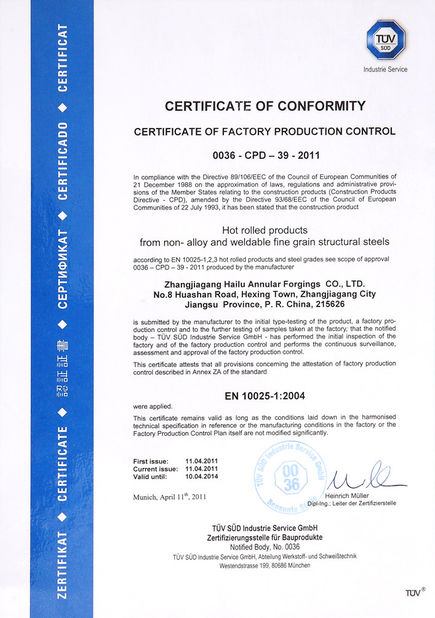
निरीक्षण मानक: चुंबकीय कण निरीक्षण, अल्ट्रासोनिक परीक्षण, और धातुवैज्ञानिक विश्लेषण जैसे गुणवत्ता नियंत्रण प्रक्रियाओं को सख्ती से लागू करें
अंतर्राष्ट्रीय प्रमाणन
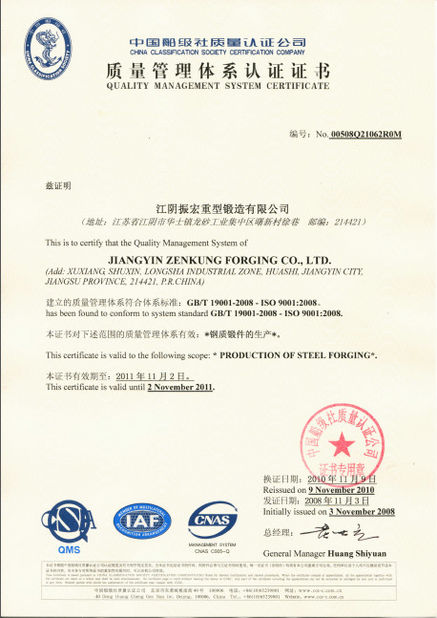
उत्पाद अमेरिकी मानक, जापानी मानक और चीनी मानक जैसे विभिन्न अंतरराष्ट्रीय मानकों का अनुपालन करता है, जो जहाज निर्माण के लिए वैश्विक मांग को पूरा करता है
IV. बाजार अनुप्रयोग और मांग विश्लेषण
अनुप्रयोग क्षेत्र
वाणिज्यिक जहाजों के क्षेत्र में: बड़े वाणिज्यिक जहाज जैसे कंटेनर जहाज, थोक वाहक, और टैंकर
सैन्य जहाज: उच्च-प्रदर्शन वाले जहाज जो वजन के प्रति संवेदनशील होते हैं, जैसे युद्धपोत और गश्ती नौकाएं
विशेष जहाज: एलएनजी वाहक, इंजीनियरिंग जहाज, अनुसंधान जहाज, आदि
बिजली उत्पादन उपकरण: समुद्री जनरेटर सेट, बिजली स्टेशनों के लिए स्टैंडबाय बिजली की आपूर्ति
बाजार का आकार
2025 में, चीनी बाजार: समुद्री कनेक्टिंग रॉड का बाजार आकार लगभग 560 मिलियन युआन है
2026 के लिए पूर्वानुमान: जहाज और बिजली उत्पादन उपकरण क्षेत्रों में सुई-दूरी कनेक्टिंग रॉड की कुल मांग लगभग 1.05 बिलियन युआन है, जिसमें जहाज क्षेत्र 53% का हिस्सा है
उत्पादन क्षमता: पेशेवर निर्माता बड़े-बोर विशेष कनेक्टिंग रॉड के 8,000-10,000 सेट की वार्षिक उत्पादन क्षमता प्राप्त कर सकते हैं



 आपका संदेश 20-3,000 अक्षरों के बीच होना चाहिए!